The Missing Piece Most People Never Get Told About — and How to Use It to Finally Feel Better.
You've probably heard the word micronutrients before. Maybe in the context of eating more vegetables, or taking a multivitamin, or somewhere in a wellness article you half-read between meetings.
But here's what most people — and honestly, most conventional healthcare providers — don't fully appreciate: micronutrients are not a wellness bonus. They are a biological requirement. And when specific ones are missing, the downstream effects reach far beyond low energy or a weakened immune system.
Missing micronutrients quietly drive gut dysfunction. They sustain chronic bloating. They lock the body into a hormonal state where weight loss becomes nearly impossible — no matter how clean you're eating or how hard you're working.
This post is going to show you exactly how that happens, which micronutrients matter most, and what it actually looks like when the body gets what it needs to heal.
What Micronutrients Actually Do — And Why "Eat More Vegetables" Isn't Enough
Micronutrients are your vitamins and minerals. Your body needs them in smaller quantities than proteins, fats, and carbohydrates — but they are the catalysts that make everything else work. Without them, no biological process runs the way it's supposed to.
Here's a partial list of what micronutrients are responsible for: producing energy at the cellular level, synthesizing hormones, regulating immune responses, producing the digestive enzymes that break down food, repairing the gut lining, controlling blood sugar, building neurotransmitters, and managing inflammation.
They are not optional. They are infrastructure.
And yet a significant percentage of people are functionally deficient in one or more critical micronutrients — not because they're eating terribly, but because chronic stress, gut dysfunction, poor soil quality in modern agriculture, and certain common medications all deplete micronutrient levels over time. You can be making genuinely good food choices and still be running on empty in ways that a standard blood panel won't catch.
That depletion has real consequences. Consequences you feel every day.
The Five Micronutrients That Matter Most For Gut Healing, Bloating, and Weight
Let's get specific. These are the nutrients that come up most consistently our practice — and more importantly, here is what each one actively does for your gut, your metabolism, and your body composition when it's present at optimal levels.
Magnesium is one of the most powerful gut-healing nutrients available, and one of the most commonly depleted. When magnesium is sufficient, it relaxes the smooth muscle throughout the digestive tract — allowing food to move through efficiently, reducing the sluggishness and backup that cause bloating and constipation. It also supports the production of digestive enzymes, regulates the nervous system signals that control gut motility, and plays a direct role in reducing gut inflammation. Beyond digestion, adequate magnesium improves insulin sensitivity, supports deep sleep — which is when the majority of cellular repair occurs — and calms the overactivated stress response that shuts digestion down in the first place. Food sources include leafy greens, pumpkin seeds, beans, and dark chocolate. But for people with existing gut issues, absorption from food alone is often insufficient, and targeted supplementation guided by testing makes a meaningful difference.
Vitamin D functions more like a hormone than a traditional vitamin. Vitamin D actively supports the integrity of the gut lining — the single-cell-thick barrier that determines what gets absorbed into the bloodstream and what stays out. When vitamin D is optimal, that lining is better maintained, intestinal permeability is reduced, and the inflammatory cascade that drives chronic bloating is dampened. From a weight loss perspective, vitamin D is directly involved in insulin function. Studies consistently show that adequate vitamin D improves insulin sensitivity and supports healthier body composition — particularly around the midsection. Sources include sunlight, fatty fish, and egg yolks, but most people require supplementation to reach levels that are therapeutically meaningful.
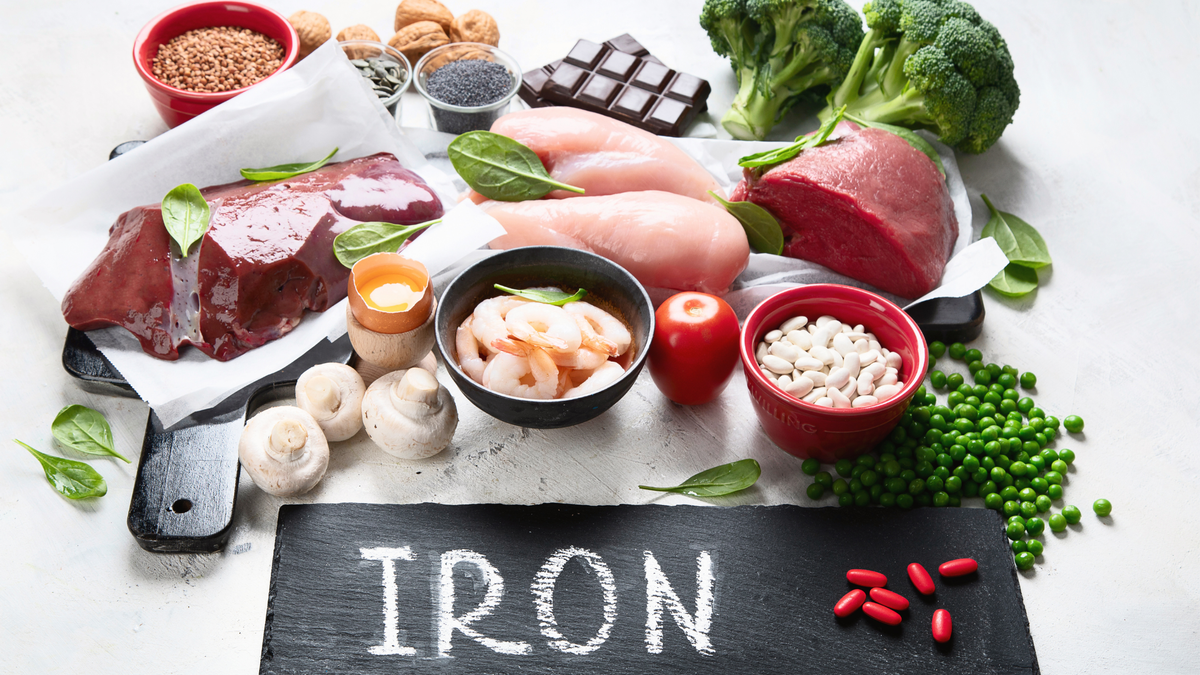
Iron is critical for gut healing because the cells that line the intestinal wall have one of the highest turnover rates in the body — they replace themselves every few days, and that process requires iron. When iron is sufficient, gut lining repair happens efficiently. When iron is low, that repair slows, the lining becomes more vulnerable to inflammation and permeability, and absorption of other nutrients suffers as a result. Iron is also how your body carries oxygen to every cell and organ — including the ones responsible for metabolism. Sufficient iron means efficient energy production, mental clarity, and a metabolism that's operating at full capacity. Sources include red meat, lentils, spinach, and pumpkin seeds — and pairing plant-based iron with vitamin C dramatically improves absorption.
Omega-3 fatty acids — specifically EPA and DHA — are your body's most direct anti-inflammatory tool, and their role in gut healing is significant. Omega-3s reduce inflammation in the gut lining, support the growth of beneficial bacteria in the microbiome, improve the integrity of the intestinal barrier, and lower the systemic inflammation that drives visceral belly fat and weight loss resistance. When omega-3 levels are adequate, the gut has a fundamentally better environment in which to heal. Bloating caused by gut inflammation reduces. The hormonal environment shifts in a direction that supports fat burning rather than fat storage. Salmon, sardines, chia seeds, flaxseed, and walnuts are excellent sources — but therapeutic repletion, especially for people with existing inflammation, often requires high-quality supplementation.
Potassium works directly with sodium to regulate fluid balance throughout the body. When potassium is optimal, the body maintains healthy fluid distribution — cells are hydrated, tissue is not waterlogged, and that persistent puffiness and heaviness that so many people experience disappears. Potassium also supports healthy blood pressure, muscle function, and the nerve signals that regulate gut motility. From a bloating perspective specifically, adequate potassium helps the body release excess retained fluid — which is often a significant component of what people experience as bloating, particularly the diffuse, whole-body kind rather than localized abdominal gas. Bananas, potatoes, avocado, leafy greens, and legumes are all rich sources.
These five nutrients do not work in isolation. They are part of an interconnected system — and understanding how that system breaks down, and how it heals, is what makes the difference between chasing symptoms and actually fixing the problem.
The Root Cause Chain — How Micronutrient Deficiency Connects To Everything You're Feeling
Here is the picture that changes everything for most people we work with. Not because the individual pieces are surprising, but because seeing how they connect — in sequence — makes the whole thing suddenly make sense.
It starts with chronic stress. The relentless, low-grade, never-quite-off stress that most people are living with. Rushing through meals. Poor sleep. High demands. Inadequate recovery. This state of chronic nervous system activation has a direct, physiological effect on digestion — it suppresses stomach acid production, reduces digestive enzyme output, and slows gut motility. In survival mode, digestion is not a priority. The body is focused on managing the perceived threat.
With digestion suppressed, food doesn't get broken down properly. Even carefully chosen, nutrient-dense food passes through the system incompletely processed. Undigested particles ferment in the gut. Bloating and gas develop. The microbiome — the ecosystem of bacteria that regulates immune function, mood, metabolism, and more — begins to shift out of balance. Gut inflammation rises.
And a gut that is inflamed and imbalanced cannot absorb micronutrients efficiently.
This is the link most people miss. You can be eating well and still be depleting your nutrient reserves — because the gut responsible for absorbing those nutrients is not functioning the way it should. The food is going in. The nourishment is not getting through.
Micronutrient levels fall. Magnesium, vitamin D, iron, omega-3s, zinc, potassium — all of it running low. And without those nutrients, the body cannot regulate the systems that depend on them — including the hormonal system that governs your metabolism and your ability to maintain a healthy weight.
Insulin signaling breaks down. Blood sugar becomes unstable. The body shifts into chronic fat-storage mode. And the symptoms that result — bloating, fatigue, brain fog, weight gain around the midsection, puffiness, poor recovery — are the body's way of communicating that something foundational is missing.
Most people try to fix those symptoms directly. Less food. More exercise. Cut another food group. But the root of the chain is still intact, still driving everything, still untouched.
What Bloating Is Really Telling You
Bloating deserves specific attention here because it is one of the most commonly dismissed symptoms in conventional medicine — and one of the most informative from a functional perspective.
There are two primary drivers of bloating in this model, and they require different approaches.
The first is poor mechanical digestion. When stomach acid is low and enzyme production is insufficient, food arrives in the large intestine only partially broken down. Bacteria ferment those undigested particles and produce gas. That gas accumulates, creates pressure and distension, and produces the discomfort that so many people experience as a daily reality. This type of bloating responds to support for digestion — stomach acid, enzymes, and gut motility — not to food elimination.
The second is inflammatory and insulin-driven fluid retention. When insulin is chronically elevated and systemic inflammation is present, the body retains excess fluid in tissues. This shows up as a more diffuse puffiness — a heaviness and swelling that goes beyond the abdomen. This type responds to reducing inflammation, restoring micronutrient balance, and improving insulin sensitivity.
Understanding which you're dealing with — and what's driving it — is the difference between randomly eliminating foods and actually resolving the problem at its source.
How Micronutrients Unlock Weight Loss
This is the part of the conversation that shifts something for most people, because it reframes weight loss resistance from a willpower problem into a biological one.
Your body's ability to burn fat is not primarily controlled by how many calories you consume. It is controlled by your hormonal environment — and the most important hormone in that environment is insulin.
In a well-nourished body with healthy gut function and low inflammation, insulin works efficiently. Blood sugar rises after eating, insulin responds, blood sugar normalizes, and the body moves fluidly between fuel sources — including stored fat. But in a body with micronutrient deficiencies, chronic gut inflammation, and an overactivated stress response, insulin signaling breaks down. Blood sugar becomes unstable. Insulin stays elevated. And chronically elevated insulin functionally locks the body out of fat burning.
Here Is Where Micronutrients Directly Unlock The Door.
Magnesium restoration improves insulin sensitivity — meaning cells become more responsive to insulin's signal, blood sugar stabilizes, and the body can more efficiently shift into fat-burning mode. Vitamin D repletion normalizes insulin function and supports healthier body composition, particularly visceral fat around the midsection. Omega-3 repletion reduces the inflammation that drives insulin resistance and belly fat accumulation. Iron restoration supports the energy production and metabolic efficiency that make weight regulation possible. Potassium repletion reduces the fluid retention that masks body composition progress and contributes to the scale not moving despite genuine fat loss.
When these nutrients are restored — at the right levels, in the right forms, guided by actual testing rather than guessing — the metabolic environment shifts. Insulin sensitivity improves. Inflammation comes down. The gut heals and absorption normalizes. And weight loss becomes something the body does naturally, as a result of finally functioning the way it's designed to — not something you fight for through restriction and willpower.
This is what I mean when I say micronutrients unlock weight loss. Not as a marketing phrase, but as a literal description of what happens physiologically when the body gets what it needs.
Why Functional Medicine Testing Is The Turning Point
One of the principles we work from every day is simple: you cannot fix what you are not measuring.
Approaching micronutrient deficiency through guesswork — taking a general multivitamin, trying different supplements based on how you feel, eliminating food groups based on symptoms — is slow, imprecise, and frequently misses the actual gaps. It's the nutritional equivalent of treating an infection without culturing the bacteria first.
Comprehensive functional testing changes that entirely. It shows us your actual vitamin and mineral levels, your iron status and ferritin stores, your insulin and fasting glucose patterns, your inflammatory markers, and — through specialized gut microbiome testing — the specific state of your digestive health: what organisms are present, what's missing, where inflammation is occurring, and how efficiently your gut is actually absorbing nutrients.
That information is what makes a truly personalized protocol possible. Not the same recommendations given to everyone, but a specific, evidence-informed plan built around what your body actually needs right now.
This is consistently the turning point for people who have tried everything and felt like nothing works. Not a new diet. Not a new supplement. The actual knowledge of what is depleted, what is driving the symptoms, and what the body needs to function the way it's capable of functioning.
The Healing Path — What It Looks Like When Micronutrients Are Restored
When we address this properly — in the right sequence, with the right information — the body responds. Here is what that process looks like in practice.
The foundation is always nervous system regulation. Creating the physiological conditions in which digestion and healing can actually occur — slowing down at meals, improving sleep, addressing the chronic stress load. This is not a soft suggestion. It is the prerequisite for everything else. Micronutrient restoration cannot outpace a nervous system that is actively suppressing digestion.
From that foundation, we support digestion directly — stomach acid, digestive enzymes, and gut motility — so that the food being eaten is actually being broken down and made available for absorption.
With digestion functioning better, we address the gut itself — rebalancing the microbiome, reducing gut inflammation, and repairing the intestinal lining. This step is highly individual and guided by what testing reveals.
With a healing gut, absorption improves. And this is where targeted micronutrient restoration becomes truly effective — because now the body can actually use what we're giving it. We replete the specific nutrients that testing shows are depleted, at therapeutic doses, in bioavailable forms that the body can absorb and utilize.
As micronutrient status improves, insulin sensitivity follows. Blood sugar stabilizes. The inflammatory environment shifts. The body moves out of storage mode and into a state where healing — and fat loss — can occur naturally.
Bloating reduces. Energy returns. Mental clarity improves. Sleep deepens. Body composition shifts. Not through restriction. Not through pushing harder on a depleted body. Through giving the body what it has been missing — and getting out of the way while it does what it's designed to do.
The Shift That Changes Everything
Most people spend years asking: what do I need to cut out?
The question that actually leads somewhere is: what is my body missing?
Your symptoms are not random. They are not personal failures. They are your body's attempt to communicate that something it needs is not present in sufficient amounts. Bloating, fatigue, weight that won't shift, brain fog, poor recovery — these are signals. And when you learn to read them, and respond to what's actually being asked for, things change.
Micronutrients are not a wellness trend. They are the raw materials your body uses to heal its gut, regulate its hormones, calm its inflammation, and restore its ability to reach and maintain a healthy weight. When they are present at optimal levels, the body does not need to be forced or restricted into health. It moves there naturally.
Your body is not broken. It is not failing you. It is doing its best with what it has. And it is capable of far more — when it finally has what it needs.
Ready To Find Out What Your Body Is Actually Missing?
If this resonated — if you recognized your own experience somewhere in these pages — this is exactly the conversation we have with my clients every day.
We start with comprehensive functional testing that gives us a complete, precise picture of your gut health, your micronutrient status, your metabolic and hormonal markers, and your inflammatory load. From there, we build a protocol designed entirely around your specific biology — not a template, not a general plan, but a targeted approach to what your body actually needs right now.
You don't have to keep guessing. You don't have to keep working harder at things that aren't addressing the real issue. There is a more precise, more effective path — and it starts with actually knowing what's going on inside.
Book your discovery call today. Let's find out what your body has been trying to tell you — and build a real plan to get you there.
This content has been generated with the assistance of ChatGPT, an AI language model. While every effort has been made to ensure originality and accuracy, the content may inadvertently include or resemble information from other sources. This is not intentional and we encourage users to conduct their own verification if specific details are critical for their purposes. The use of this AI-generated content is for informational purposes only and should not be considered as a substitute for professional medical advice and is not intended to diagnose or treat.